


Blinds give everyone something to fight for. They also move around the table with the button, so every player pays them once per orbit in a stable game.
Small Blind and Big Blind at a Glance
In a $1/$2 cash game:
- The small blind posts $1.
- The big blind posts $2.
- The player left of the big blind acts first preflop.
- If nobody raises, calling costs $2 total.
- The big blind may check if action returns without a raise.
The small blind is often half the big blind, but the room can use another structure, such as $1/$3 or $2/$5. The table listing or tournament sheet is the authority.
Why Poker Uses Forced Bets
If there were no cost to wait, players could fold until they received only the strongest starting hands. Blinds seed the pot and make that waiting strategy expensive. The button keeps the obligation fair by moving it around the table.
The blind is not a fee paid to the house. It is part of the pot and can be won. The house may collect rake separately in a cash game; tournament fees are normally part of the buy-in terms.
Where the Blinds Sit
At a table with three or more players, the small blind sits immediately left of the button and the big blind sits immediately left of the small blind. Under the gun sits left of the big blind and opens the preflop action.
Watch Howcast explain the small blind, big blind, button order, and the difference between cash-game and tournament blinds in the verified segment below. The video is in English; captions are available.
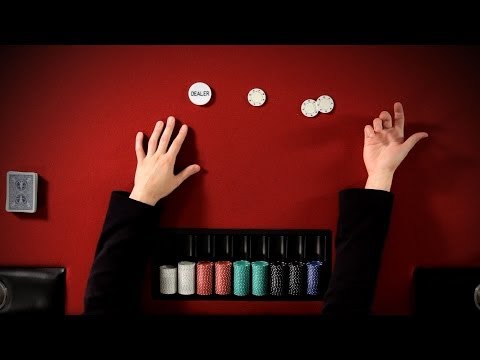
After the flop, the first active player left of the button acts first. That means the blinds are usually out of position against players who entered from late position.
Heads-up is different: the button posts the small blind and acts first preflop, while the big blind acts first after the flop. Confirm the room's heads-up procedure before dealing.


Posting and Preflop Action
Suppose the blinds are $1/$2. The small blind posts $1 and the big blind posts $2 before receiving cards.
If the first player calls, that player puts in $2. If another player raises to $8, later players must fold, call $8 total, or make a legal re-raise. The small blind has already invested $1, so calling costs $7 more. The big blind has invested $2, so calling costs $6 more.
Money already posted is part of the pot, not a coupon that reduces the official bet size for everyone else.

What Happens When It Folds to the Blinds
If every player folds to the small blind, the hand is blind versus blind. The small blind can fold, call the remaining amount, or raise. If the small blind calls and there is no raise, the big blind can check and see a flop or raise.
If every player including the small blind folds, the big blind wins the pot without showing. In casual table talk, people may say the big blind “gets a walk.”
Blinds in Cash Games
Cash-game blind amounts usually remain fixed until the table changes stakes. Players can leave and rejoin, so rooms use posting rules to prevent somebody from repeatedly dodging the blinds.
A new or returning player may have to:
- wait for the big blind,
- post a big blind immediately,
- post missed blinds, or
- enter behind the button under a room-specific rule.
Do not assume one cardroom's missed-blind procedure applies everywhere. Ask the dealer or read the software prompt.
Blinds in Tournaments
Tournament blinds increase on a published schedule. A level might run for a fixed time, then the small blind, big blind, and ante rise. Your stack does not need to shrink in chip count to become shorter in practical terms: 30,000 chips equal 150 big blinds at 100/200 but only 30 big blinds at 500/1,000.
Players therefore describe tournament stacks in big blinds. Saying “I have 25 bb” communicates the effective stack more clearly than naming the chip count alone.

Antes and Big Blind Antes
An ante is another forced contribution posted before the deal. In a traditional ante structure, every player posts a small amount. In a big blind ante structure, the big blind posts one combined ante for the table in addition to the big blind.
An ante adds dead money and increases the reward for winning the pot. It does not replace the small and big blinds unless the specific game says so.
When a short stack cannot cover every obligation, the order of posting and pot eligibility follow the tournament or room rules. This is exactly the kind of edge case to leave to the dealer, floor, or software rather than settle by table argument.
Straddles Are Not Ordinary Blinds
A straddle is an extra voluntary or house-permitted forced bet, often posted under the gun before cards are dealt. It can change the effective stakes and preflop action. The amount, location, re-straddle rules, and whether it is live vary by room.
Do not describe a $1/$2/$5 game accurately without learning what the $5 represents. It might be a mandatory third blind, a common straddle, or a table-specific structure.
Worked Pot Examples
Unraised pot
Six players sit at $1/$2. UTG calls $2, the cutoff calls, the button folds, the small blind adds $1, and the big blind checks. The pot is $8: four players have contributed $2 each.
Raise and call
At $1/$2, the cutoff raises to $6, the small blind folds, and the big blind calls $4 more. Everyone else folds. Before rake, the pot is $13: $6 from the cutoff, $6 from the big blind, and the small blind's dead $1.
Big blind ante
At 500/1,000 with a 1,000 big blind ante, the small blind posts 500 and the big blind posts 2,000 total: 1,000 as the blind and 1,000 as the ante. How a short big blind's chips are allocated is governed by the tournament procedure.
Blind Strategy Without a Memorized Chart
The blinds are awkward because they invest chips before seeing cards and act early after the flop. But the big blind also receives a price to call, and the small blind can sometimes raise when folds reach it.
Use these questions before reaching for a chart:
- How many players remain in the hand?
- Who has position after the flop?
- What is the effective stack in big blinds?
- Is there an ante or straddle?
- What raise size are you facing?
- How much rake does the format take?
“Defend the big blind” does not mean call everything. It means compare your hand, price, position, range, and format instead of surrendering automatically.
Common Blind Mistakes
- Acting first preflop from the small blind in a multi-player hand.
- Forgetting that the big blind can check when nobody raises.
- Calling only the extra amount of a raise rather than matching the total.
- Treating an ante and a blind as the same obligation.
- Using chip count instead of big blinds to judge a tournament stack.
- Assuming a straddle follows universal rules.
- Posting missed blinds without checking the room procedure.
Where Blinds Fit in Your Next Lesson
Blinds make more sense once you can map poker positions. If the change from preflop to postflop action is still fuzzy, follow one complete deal in how to play poker.
Poker-Eye uses the current table and hand, your cards and position, and available opponent context during supported play. That means blind position is one input to the current decision, not a fixed rule that every small blind or big blind should take the same action. See How It Works for the verified product workflow.
Sources
- PokerNews: Blinds for the definitions and purpose of the forced small and big blind bets.
- PokerStars: Poker Blinds for button movement, blind placement, and preflop action order.
- Poker Tournament Directors Association: Rules for heads-up blind placement and tournament blind procedures.
- 888poker: Poker Blinds Charts and Explanations for cash-game examples and changing tournament blind levels.
Poker involves financial risk. No tool or strategy guarantees a result. Follow local requirements and the current rules of the poker room you use.
About the Editorial Team
The Poker-Eye Editorial Team researches, checks, and maintains product and educational content. Sources and product boundaries are reviewed before publication.